
Most reef keepers know their salinity, temperature, and dosing schedule. Many can tell you the exact numbers from their latest water test. Yet plenty of experienced hobbyists still don’t know how their pH changes from night to morning.
That matters more than many people realize. A saltwater tank pH that regularly drifts by large amounts can slow coral growth, encourage algae problems, and put unnecessary stress on fish and invertebrates before obvious warning signs appear. Natural seawater stays within a narrow chemical range, and a healthy reef aquarium depends on maintaining that same kind of stability.
This guide explains what a normal pH for a saltwater tank should look like, why high pH for saltwater tank systems happens, what causes low pH swings, and how to correct problems without creating sudden changes. You’ll learn about the ideal pH for saltwater reef tank systems, the relationship between KH and carbonate hardness, the role of surface agitation, how to raise pH in a reef tank naturally, how to lower pH in a reef tank safely, and how freshwater aquarium pH differs from marine systems. Whether you are dealing with an 8.8 pH in a reef tank or fine-tuning a new aquarium, the goal is the same: understand the cause, test consistently, and make controlled adjustments.
What Is a Good pH for a Saltwater Tank?
The Ideal pH Range
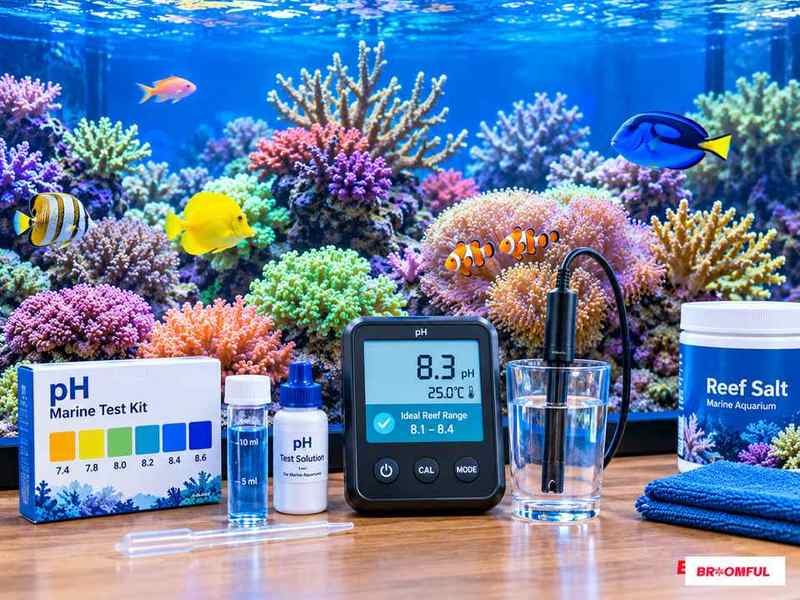
A good pH for a saltwater tank generally falls between 8.1 and 8.4, which closely matches the conditions found in natural seawater. This range supports normal coral calcification, healthy coloration, and proper fish respiration. Reef systems that remain below 7.9 or above 8.5 for long periods deserve attention, even if livestock appears healthy at first. Problems caused by unstable chemistry often develop gradually through slower coral growth or tissue stress rather than immediate losses.
Normal pH for a Saltwater Tank by Time of Day
Unlike salinity or temperature, pH for a saltwater tank is constantly moving because aquarium biology changes throughout the day. During daylight hours, photosynthetic organisms such as macroalgae, coralline algae, and coral zooxanthellae consume carbon dioxide. Less dissolved CO2 pushes pH upward.
Once the lights go out, photosynthesis stops while respiration continues. Carbon dioxide builds up in the water, causing pH to decline overnight. A daily change of 0.1–0.2 between the lowest point before lights turn on and the highest point later in the day is normal. Trying to eliminate every small movement usually creates more problems than it solves.
| Time of Day | Typical pH Behavior | What’s Driving It |
| Early morning (pre-lights) | Daily low, often 7.9–8.1 | Overnight CO2 buildup from respiration |
| Midday to late afternoon | Daily high, often 8.2–8.4 | Photosynthesis pulling CO2 out of solution |
| Late evening | Beginning to fall | Lights off, respiration resumes dominance |
| Overnight | Continued decline | No photosynthetic CO2 removal |
Why This Range Matters for Marine Life
The ideal pH for a saltwater reef tank affects how easily corals and coralline algae can build calcium carbonate structures. When pH drops, the water’s carbonate chemistry changes, and calcifying organisms have to work harder to access the materials needed for skeleton formation.
Fish usually tolerate short-term changes better than many invertebrates, but prolonged low pH can still create stress. A reef system that remains chemically stable gives corals and other organisms a better environment for normal growth and function.
Species-Specific Tolerances
Different animals in a saltwater reef tank pH system do not all respond the same way to changes.
SPS (small polyp stony) corals such as Acropora are among the more sensitive reef inhabitants and generally perform best when pH stays close to the 8.1–8.3 range with limited daily movement. LPS (large polyp stony) corals and soft corals usually tolerate a broader range, often performing well between 7.9 and 8.4.
Most reef fish, shrimp, snails, and macroalgae tolerate wider conditions and typically show problems only when pH remains below 7.7 or rises above 8.6 for extended periods.
pH, KH, and Carbonate Hardness: How They Work Together
What Is KH in a Fish Tank?
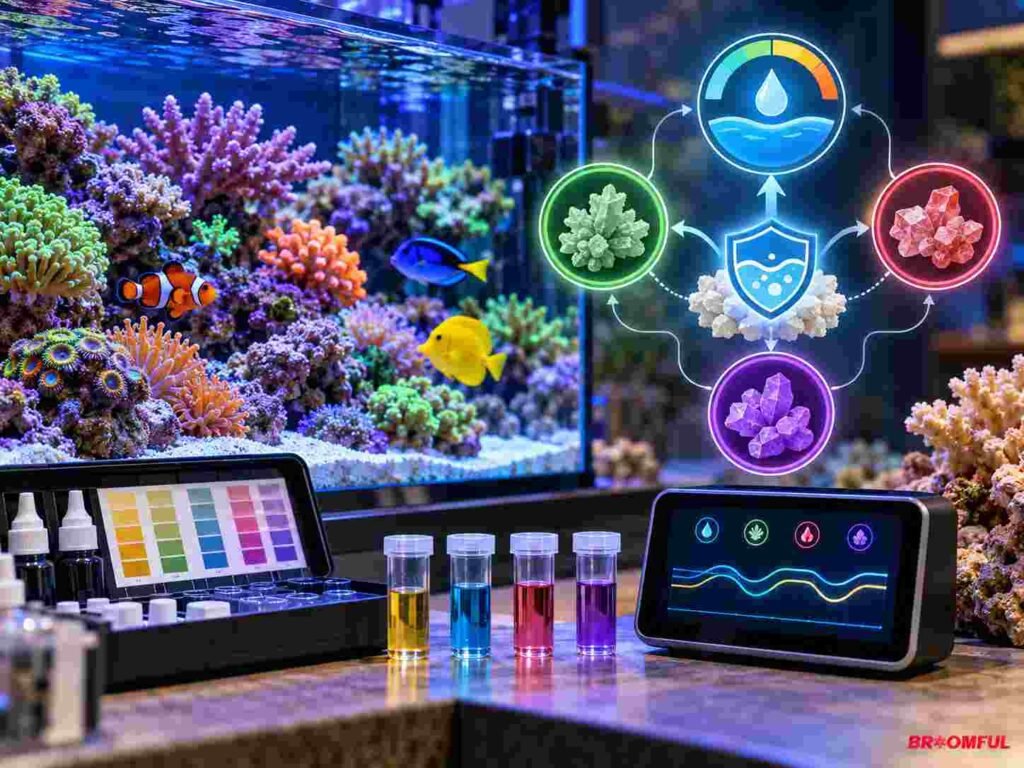
KH, or carbonate hardness, measures the amount of bicarbonate and carbonate ions available in the water. It is usually measured in degrees of carbonate hardness (dKH) or carbonate ppm.
Understanding what KH is in a fish tank matters because KH acts as a chemical buffer. It helps prevent sudden pH changes by absorbing acids and bases before they create large swings in the water chemistry. A saltwater tank with stable KH can maintain a more consistent pH than a system with low buffering capacity, even when both tanks begin with the same starting pH.
Ideal KH Range for Saltwater Tanks
Most reef tanks aim for a carbonate range of 7–11 dKH, with many reef keepers maintaining levels around 8–9 dKH as a practical balance between coral growth and stability.
Natural seawater sits closer to 7 dKH, but many aquarium keepers maintain slightly higher levels to provide additional buffering capacity and support calcification in captive reef systems.
Is High KH Bad for Fish?
Is high KH bad for fish is a common question among hobbyists moving between freshwater and saltwater aquariums. The answer depends on the type of system and the actual KH level.
In a saltwater tank, KH between 7–12 dKH is generally beneficial because it helps prevent unstable pH movement. Problems usually appear when KH rises much higher, around 14–15 dKH or above, where it can contribute to artificially elevated pH and create an imbalance between calcium and alkalinity.
Very low KH can also create problems. When KH drops below about 5 dKH, the water loses much of its ability to resist acids created by normal biological activity, making pH swings more likely.
Freshwater systems are different. Species that naturally live in soft, acidic water, such as discus and wild-caught tetras, may not respond well to elevated KH because it can keep pH higher than their preferred conditions and affect breeding behavior or egg development.
Alkalinity, Calcium, and Magnesium: The Reef Triangle
KH does not work independently. It is closely connected with calcium and magnesium, which reef keepers often refer to as the “big three” of reef chemistry.
Increasing alkalinity without keeping calcium balanced can cause calcium carbonate to come out of solution. This can create a white cloud in the aquarium, often called a “snowstorm” event, while reducing both calcium and alkalinity levels at the same time. The resulting imbalance can also affect pH stability.
For this reason, any pH for saltwater tank approach should consider alkalinity and calcium together rather than treating pH as a separate number.
| Parameter | Reef Tank Target | Function |
| pH | 8.1–8.4 | Overall acid/base balance |
| KH / Alkalinity | 7–11 dKH (125–200 ppm) | Buffers pH swings, feeds calcification |
| Calcium | 380–450 ppm | Skeletal building block for corals |
| Magnesium | 1250–1350 ppm | Keeps calcium and alkalinity in solution together |
What Causes High pH in a Saltwater Tank
Overdosing Buffers or Additives
The most common reason for high pH in a saltwater tank is trying to correct a low reading too aggressively. Adding too much pH buffer, kalkwasser, or sodium bicarbonate can push the aquarium beyond the desired range.
Kalkwasser (limewater) is especially powerful because calcium hydroxide naturally has a very high pH. When added faster than the aquarium can use it, pH can climb into the high 8s or even above 9.0. This is one common reason behind an 8.8 pH in a reef tank reading.
Low CO2 Environments
Some aquariums naturally run higher pH because the surrounding air contains less carbon dioxide. Homes with strong ventilation, constant HVAC air exchange, higher elevations, or newer, tightly sealed construction can have lower indoor CO2 levels.
Because carbon dioxide helps control aquarium pH, reduced CO2 availability can allow pH to remain elevated. In this situation, the aquarium may not have a chemical problem; the surrounding air is simply changing the gas balance.
New Substrate or Aragonite Reactions
New crushed coral, aragonite sand, and some live rock can influence pH because they contain calcium carbonate. These materials gradually dissolve and provide buffering capacity.
A newly established aquarium with higher-than-expected pH is often responding to fresh aragonite material. As the system matures, this effect usually becomes less noticeable.
Heavy Macroalgae or Refugium Growth
A productive refugium can remove nutrients effectively, but strong macroalgae growth can also remove large amounts of carbon dioxide during long lighting periods.
If macroalgae consume CO2 faster than expected, daytime pH may climb higher than normal, especially near the end of the refugium lighting schedule.
What Causes Low pH in a Saltwater Tank
CO2 Buildup From Poor Air Exchange
Low pH for a saltwater tank is most often linked to excess carbon dioxide rather than a lack of additives. Rooms with limited airflow, basements, enclosed spaces, or energy-efficient homes can allow CO2 to accumulate in the air.
That CO2 eventually dissolves into the aquarium water and lowers pH. Even a well-maintained tank with proper dosing can struggle with low pH if the surrounding air does not provide enough gas exchange.
Overstocking and Bioload
Every fish and invertebrate contributes to the amount of respiration happening in an aquarium. As animals consume oxygen and release carbon dioxide, the additional CO2 can gradually push pH downward.
A heavily stocked saltwater tank operating near its biological limit will often show lower pH readings compared with a similar-sized aquarium carrying a lighter livestock load.
Depleted Alkalinity (Low KH)
Low KH removes one of the aquarium’s main defenses against pH changes. When carbonate hardness drops, acids produced through normal biological processes, decomposing food, and animal respiration can affect pH more quickly.
A tank with insufficient buffering capacity may appear stable for a while, then begin showing larger and more frequent pH swings.
Old or Exhausted CO2 Scrubbing Media
Aquariums using CO2 scrubbers or calcium reactors rely on media that eventually becomes exhausted. Once that media loses effectiveness, carbon dioxide removal can slow down or stop.
This can create a gradual pH decline that is easy to overlook because the change happens over several weeks rather than all at once.
How to Raise pH in a Reef Tank Naturally
Improve Air Exchange First
Before adding supplements, improving gas exchange is usually the safest way to raise pH in a reef tank naturally. The goal is to bring in air with lower CO2 levels and allow excess carbon dioxide to leave the aquarium.
Running an airline from outside air to a protein skimmer or air pump can improve pH over time because the aquarium receives fresher air instead of repeatedly circulating CO2-rich indoor air.
Add or Upgrade Surface Agitation
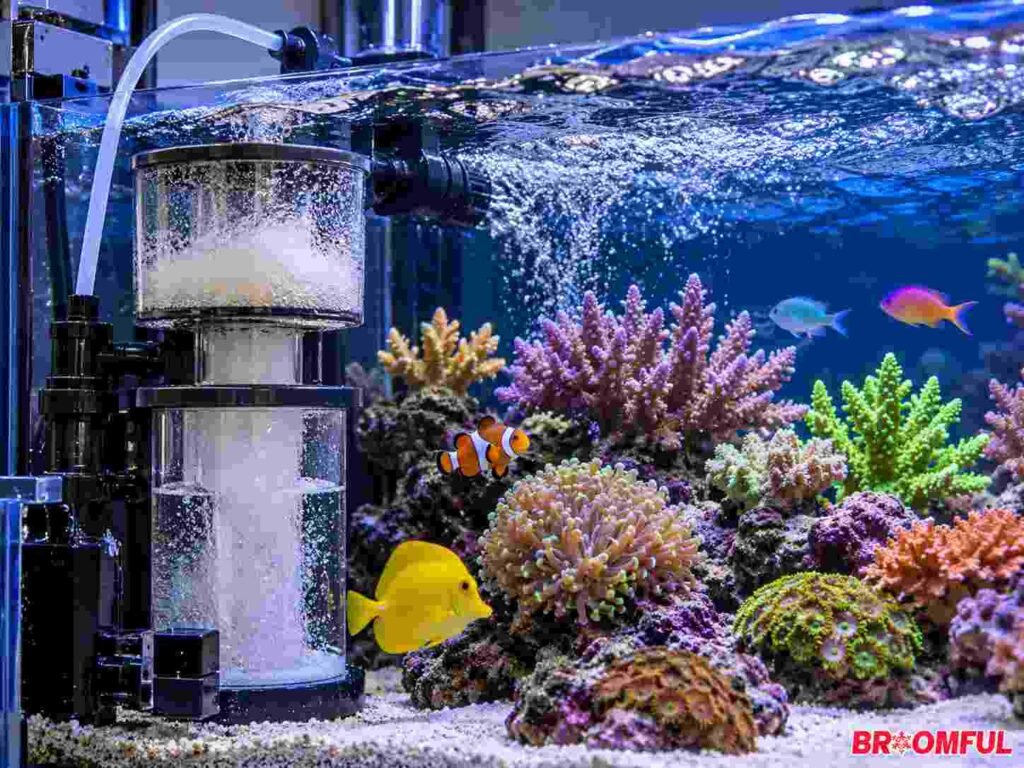
Gas exchange happens at the water’s surface, so increasing surface movement can improve how quickly carbon dioxide escapes and oxygen enters.
Using powerheads aimed toward the surface, adjusting return nozzles to create stronger ripples, or improving water movement around the display can increase surface agitation fish tank–wide. This encourages more natural pH movement without relying on chemical additives.
Dose a Two-Part Alkalinity Supplement
A balanced two-part system containing alkalinity and calcium components can support reef chemistry while gently influencing pH. This approach is different from using products designed only to raise pH, which can create sudden spikes.
Add small amounts gradually, then retest before making further adjustments. Slow changes are easier for livestock to handle and easier for the aquarist to evaluate.
Run Kalkwasser Carefully
Kalkwasser is one of the most effective tools to raise pH in a reef tank naturally because it replaces evaporated water with limewater containing calcium hydroxide.
Because kalkwasser has a very high pH, it must be added carefully. It should be delivered slowly through an auto-top-off system at a rate the aquarium can consume. Directly adding large amounts can create dangerous chemistry swings.
Add a Refugium With a Reverse Light Cycle
A refugium running on the opposite schedule from the display tank can help smooth daily pH movement.
When the main aquarium lights are off, and respiration causes pH to drop, macroalgae in the refugium continue photosynthesis and remove carbon dioxide. This reduces the size of the overnight decline instead of allowing pH to fall unchecked.
How to Lower pH in a Reef Tank Safely
Diagnose Before You Dose
Before deciding how to lower pH for saltwater tank readings, confirm that the measurement is accurate. A miscalibrated probe or old test kit can make a normal aquarium appear to have a chemistry problem.
If you need to decrease pH in an aquarium, first identify the reason behind the elevated reading instead of adding chemical pH reducers immediately. Sudden changes can stress marine life, so adjustments should always be made gradually and carefully.
Retest at the same time each day for two or three days. Looking at the pattern is often more useful than reacting to a single reading. Monitoring trends helps determine whether the aquarium has a genuine pH imbalance or a temporary fluctuation caused by normal biological activity.
Reduce or Pause Kalkwasser and Buffer Dosing
If you see an 8.8 pH in a reef tank reading, the first step is usually stopping the products that may be driving the increase.
Pause kalkwasser, buffer, or pH-boosting additives for 24–48 hours and test again. Many elevated readings improve once the source of excess alkalinity or hydroxide is removed.
Increase CO2 Availability
Very high pH can sometimes be corrected by allowing slightly more carbon dioxide into the system. This may involve reducing outside air exchange temporarily or using another controlled method to increase CO2 exposure.
Any adjustment should happen slowly. A sudden pH drop can be just as stressful as a high reading.
Switch to a Balanced Two-Part or Calcium Reactor
If repeated dosing is causing unstable pH, changing the approach can help. A balanced alkalinity/calcium system or a calcium reactor provides a more controlled way to maintain reef chemistry.
Calcium reactors naturally introduce a slightly more CO2-rich environment, which can help prevent the sharp increases caused by excessive buffer dosing.
Water Changes With Properly Mixed Saltwater
A partial water change with properly mixed saltwater in the 8.1–8.4 range can gradually bring an elevated pH closer to normal.
Avoid making large corrections with freshly mixed saltwater that has not had time to stabilize. Newly mixed saltwater can temporarily show different chemistry while gases and minerals reach equilibrium.
| Situation | Best First Action | Backup Action | Avoid |
| High pH for saltwater tank (8.5+) | Pause all buffer/kalk dosing 24–48 hrs | Small water change with pre-tested saltwater | Adding pH-down products immediately |
| Low pH for saltwater tank (below 7.9) | Add fresh outside air line to skimmer | Increase surface agitation | Dosing large amounts of buffer at once |
| 8.8 pH in reef tank | Verify with second test kit/probe | Reduce refugium light duration | Assuming equipment failure without retesting |
| Daily swing over 0.3 | Check and raise KH if below 7 dKH | Add reverse-cycle refugium | Testing only once per day |
Surface Agitation and Aquarium pH Stability
Why Surface Agitation Matters So Much
Aquarium surface agitation is one of the most overlooked parts of pH management in both saltwater and freshwater systems. The water’s surface is where gases such as carbon dioxide and oxygen move between the aquarium and the surrounding air.
When the surface stays completely still, gas exchange slows down. Carbon dioxide can build up more easily, which often leads to lower pH readings, especially overnight when respiration continues without photosynthesis removing CO2.
How Much Surface Agitation Is Enough
The ideal amount of movement creates a visible ripple across the surface without causing excessive splashing or salt creep.
Powerheads aimed toward the surface at roughly 30–45 degrees or a return nozzle positioned to disturb surface tension usually provide enough circulation for many aquariums. The goal is steady gas exchange rather than aggressive turbulence.
Surface Agitation vs Protein Skimmers
Protein skimmers naturally improve gas exchange because they mix large amounts of air with aquarium water inside the reaction chamber. This is one reason reef tanks with efficient skimming often maintain steadier pH compared with small systems without skimmers.
For skimmerless pico or nano reefs, strong surface agitation becomes even more important because another major source of gas exchange is missing.
Signs Your Tank Needs More Agitation
A consistently low morning pH reading below 7.9 combined with a flat, motionless surface often points toward poor gas exchange rather than a missing chemical additive.
Increasing surface agitation fish tank–wide is usually the first adjustment worth trying because it addresses the underlying issue without adding new chemistry to the system.
Saltwater vs Freshwater Aquarium pH: What Changes
Different Target Ranges
pH for freshwater fish tank systems usually operates at lower levels than marine aquariums. Many community freshwater species do well between 6.5 and 7.5, although individual species have their own preferences.
African cichlids may prefer higher values closer to marine conditions, often around 7.8–8.5, while soft-water species such as wild discus and many tetras commonly thrive in more acidic conditions around 6.0–6.8.
The ideal pH for freshwater aquarium tanks depends heavily on the species being kept. Saltwater systems are different because most marine livestock comes from environments with naturally stable chemistry around 8.1–8.4.
Why Freshwater Tanks Swing More
Freshwater aquariums usually contain much less carbonate hardness than reef systems. With less natural buffering, pH can change more easily due to outside influences.
This is why how to increase pH in freshwater aquariums is a common concern among hobbyists. Driftwood, planted tank CO2 injection, substrate choices, and limited KH can all affect freshwater pH more dramatically than they typically do in saltwater tanks.
Shrimp and Planted Tank Considerations
Shrimp keepers need to pay close attention to pH stability because many species have narrower preferences.
Caridina shrimp generally prefer stable, slightly acidic water around 6.2–6.8, while Neocaridina shrimp tolerate a broader range of approximately 6.5–8.0.
Planted tanks using pressurized CO2 injection may experience a pH drop of 1.0–1.5 points during the lighting period. This change is expected because dissolved CO2 increases intentionally to support plant growth.
Comparison Table: Saltwater vs Freshwater pH
| Factor | Saltwater/Reef Tank | Freshwater Tank |
| Ideal pH range | 8.1–8.4 | 6.5–7.5 (species-dependent) |
| Typical KH | 7–11 dKH | 3–8 dKH (varies widely) |
| Main pH driver | CO2 exchange, buffer dosing | Driftwood, substrate, CO2 injection |
| Daily swing | 0.1–0.2 (normal) | Can be 0.5+ with CO2 injection |
| Buffering source | Aragonite sand, live rock | Crushed coral (if used), limited otherwise |
| Species pH tolerance | Narrow, consistent across most livestock | Wide, varies by species group |
Equipment That Helps Stabilize pH Long-Term
Automatic Top-Off Systems (ATO)
An auto top-off system can improve pH stability by keeping evaporation replacement consistent. When water evaporates, dissolved minerals remain behind, which can slowly change salinity and other parameters if freshwater replacement is inconsistent.
An ATO connected to a kalkwasser reservoir can also deliver small amounts of alkalinity and calcium through evaporation replacement. This provides a gradual addition rather than a large manual dose that can disrupt chemistry.
CO2 Scrubbers and Fresh Air Intakes
Aquariums in homes with elevated indoor CO2 levels may benefit from a CO2 scrubber or a fresh-air intake system.
A CO2 scrubber uses soda lime media to remove carbon dioxide from air before it enters the skimmer. For some tanks experiencing persistent low pH, this can improve readings without changing dosing routines.
Controllers and Continuous Monitoring
Aquarium controllers with pH probe modules allow reef keepers to track changes throughout the day instead of relying only on occasional tests.
Continuous monitoring reveals the normal daily curve and makes it easier to separate expected fluctuations from real problems. Some systems can also send alerts when pH moves beyond a chosen range, helping identify equipment issues such as dosing pump failures.
Calcium Reactors for Long-Term Alkalinity Support
Large SPS systems often require more calcium and alkalinity than manual dosing can comfortably provide.
A calcium reactor dissolves coral skeleton media using CO2-acidified water, returning calcium and carbonate to the aquarium. This method provides steady supplementation and usually creates a smoother chemistry pattern compared with adding large amounts of liquid supplements at once.
Common pH Mistakes Reef Keepers Make
Chasing Every Small Fluctuation
Many new reef keepers test pH repeatedly and react to every small movement. A change of 0.05 or even a normal daily shift is usually not a sign that something is wrong.
A healthy reef does not maintain a perfectly flat pH line. A daily swing of 0.1–0.2 is part of normal biological activity. The goal is predictable stability, not eliminating every natural change.
Dosing Multiple Products That Target the Same Parameter
Using several products designed to influence pH or alkalinity at the same time can quickly make the system difficult to control.
A pH buffer, kalkwasser, and two-part supplement may each affect the same chemistry in different ways. When combined without careful testing, they can push the aquarium beyond the intended range.
Choose a primary method for maintaining alkalinity and pH, then monitor how the tank responds before adding additional solutions.
Ignoring KH While Only Watching pH
A tank can show acceptable pH readings while KH slowly declines in the background. Once buffering capacity becomes too low, pH can begin changing much more dramatically.
Testing KH alongside pH gives a clearer picture of what is happening inside the aquarium, especially in heavily stocked SPS systems.
Testing at Inconsistent Times
Comparing pH readings taken at different points in the day can create a false impression of instability.
A reading taken early morning will naturally differ from one taken in the afternoon because photosynthesis and respiration are constantly changing CO2 levels. Testing at the same time allows you to identify actual trends instead of normal daily movement.
Testing pH the Right Way
Digital Probe vs Liquid Test Kit
Liquid reagent kits are useful for occasional checks and are generally affordable, but they only provide a single snapshot of the aquarium.
Digital pH probes and controllers provide ongoing data, which makes them more useful when investigating unexplained high pH for saltwater tank issues or an 8.8 pH reading in a reef tank.
A properly calibrated probe checked at consistent times can reveal patterns that a single test cannot.
Calibration Frequency
Digital probes slowly drift and require regular calibration. Fresh calibration solutions at 7.0 and 10.0 (or 4.0) should be used every 2–4 weeks to maintain accuracy.
An incorrectly calibrated probe can lead hobbyists to make unnecessary adjustments based on readings that are not accurate.
When and How Often to Test
A stable, established aquarium should have pH checked at least twice weekly. Testing more frequently is useful during troubleshooting, after changing dosing routines, or when adding new livestock.
Taking measurements at the same time each day removes the normal daily cycle from the comparison and makes real changes easier to identify.
Troubleshooting Common pH Scenarios
Scenario: Stable Tank, Sudden pH Spike
A sudden pH increase often points toward a dosing issue. Possible causes include a malfunctioning dosing pump, incorrect dosing concentration, or a newly mixed buffer solution that was stronger than expected.
Check equipment and recent changes before assuming the aquarium has developed a biological problem.
Scenario: Gradual Decline Over Several Weeks
A slow pH drop usually suggests a gradual change in the system. Possible causes include increased livestock load, exhausted CO2 scrubber media, an aging reactor setup, or seasonal changes in indoor air quality.
Repeatedly adding buffer may hide the symptom without fixing the cause. Improving gas exchange or correcting the underlying issue is usually the better approach.
Scenario: pH Fine During the Day, Crashes Overnight
A large overnight decline usually indicates that respiration is adding more CO2 than the system can remove.
Improving nighttime surface agitation or adding a reverse-cycle refugium can help reduce this pattern by improving overnight gas exchange.
Scenario: New Tank Running High for the First Month
New aquariums containing fresh aragonite sand or live rock may show elevated pH while these materials continue buffering the water.
In many cases, no immediate correction is required. Monitoring the system while it matures over 4–6 weeks is usually enough.
Building a Long-Term pH Management Routine
Weekly Testing Checklist
Test pH alongside alkalinity and calcium on the same schedule each week. Looking at these values together makes it easier to determine which parameter is actually changing.
Tracking only pH can hide the reason behind a shift because pH is influenced by several connected parts of reef chemistry.
Seasonal Adjustments
Indoor air conditions often change throughout the year. Heating and air conditioning can affect ventilation, which may influence CO2 levels around the aquarium.
Reviewing pH records every few months can reveal seasonal patterns and show when fresh-air intake or dosing adjustments may be needed.
When to Call In Professional Water Testing
If home test results show normal pH, KH, and calcium but corals continue showing stress, professional reef water testing can help identify other possible chemistry issues.
Specialized services such as Triton or similar ICP-OES testing can measure trace elements that standard hobby test kits cannot evaluate.
FAQ: People Also Ask
What is a good pH for a saltwater tank?
A good pH for a saltwater tank is 8.1–8.4, which matches natural ocean conditions. This range supports coral calcification, fish respiration, and coral coloration. Daily changes of 0.1–0.2 between daytime and nighttime are normal and do not require correction by themselves.
What should my pH level be in my saltwater tank?
Your target should be 8.1–8.4, measured consistently at the same time of day. SPS-focused systems often benefit from staying near the middle of this range, while fish-only aquariums may tolerate a wider range. Stability matters more than reaching an exact number every test.
Is 8.8 pH bad for a reef tank?
Yes, 8.8 pH in a reef tank is above the recommended range and usually points to issues such as excessive kalkwasser, buffer use, or a low-CO2 environment. Livestock may not die immediately, but prolonged exposure can stress corals and disturb calcium/alkalinity balance. Pause dosing and retest within 48 hours.
How do I raise pH in my reef tank naturally?
Improve outside air exchange to the skimmer, increase surface agitation, and use a balanced alkalinity supplement gradually. Kalkwasser through an auto-top-off system can also raise pH when added slowly at a rate the aquarium can handle.
How do I lower pH in my saltwater tank?
Stop buffer or Kalkwasser dosing for 24–48 hours first because overcorrection is a common cause of elevated pH. If levels remain high, carefully increase CO2 availability or perform a water change using properly tested saltwater.
What is normal pH for a saltwater tank overnight?
Overnight pH usually reaches the daily low, often around 7.9–8.1, because respiration continues while photosynthesis stops. This is expected as long as the aquarium recovers during the day.
Does surface agitation really affect pH?
Yes. Surface agitation controls how efficiently carbon dioxide leaves the aquarium and oxygen enters it. Tanks with weak surface movement often experience lower and less stable pH compared with systems with better gas exchange.
Is high KH bad for fish in a saltwater tank?
Generally no. KH between 7–12 dKH helps stabilize pH in saltwater systems. Problems usually occur when KH becomes extremely high, around 14–15 dKH or above, or when KH becomes too low and allows unstable pH changes.
Conclusion
Managing pH for a saltwater tank is mainly about maintaining stability rather than chasing a single perfect number. Keep the system within the 8.1–8.4 range, focus on gas exchange and surface agitation before relying on chemical adjustments, and monitor pH alongside KH and calcium because these parameters work together.
Whether you are correcting an 8.8 pH in a reef tank or trying to raise pH in a reef tank naturally, gradual changes combined with consistent testing are safer than sudden corrections. Test at the same time for several days, identify the pattern, and use the right solution for the actual cause.
