
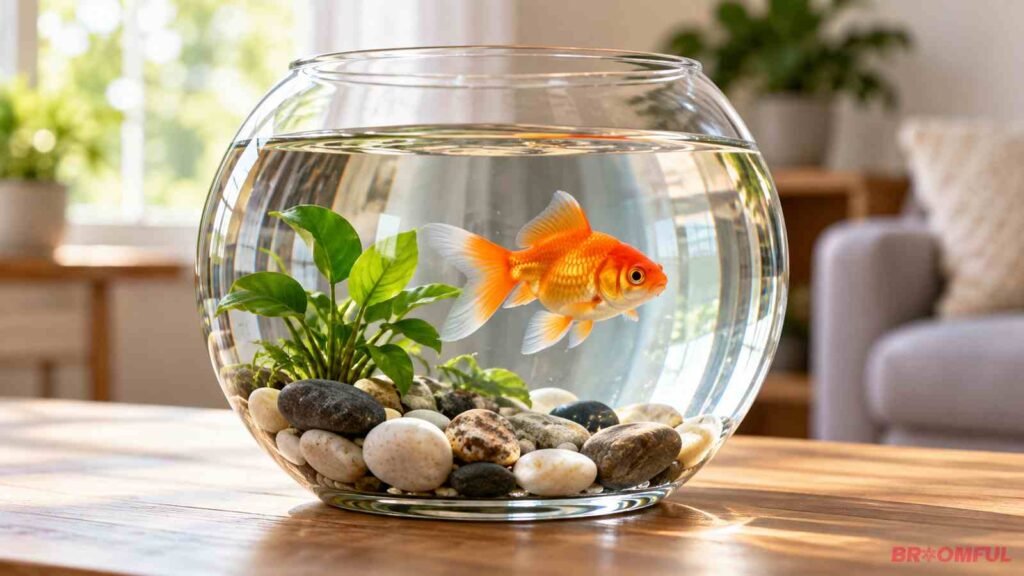
Nearly 90% of goldfish brought home in a bowl (whether from a fair, a school carnival, or a pet store) do not survive their first year. The problem is not that goldfish are delicate fish. The problem is that most new owners are never shown how to take care of a goldfish in a bowl properly.
A goldfish is not really a “starter pet.” It is a cold-water fish that can live 10–20+ years and grow much larger than most people expect. The small bowl it usually comes home in is often the biggest challenge standing between the fish and a healthy life.
If you already have a goldfish in a bowl, there is no need to panic or make a sudden decision. What matters is having a clear plan for improving its living conditions and keeping the water safe.
In this guide, you’ll learn:
- Whether it’s actually possible (or safe) to keep a goldfish in a bowl long-term
- How to treat tap water so it won’t poison your fish
- What to feed a goldfish and how often
- How to keep oxygen levels up without a pump
- Exactly when and how to upgrade to a proper home
The goal is simple: help your goldfish do more than survive. Give it the conditions it needs to stay healthy.
Can You Keep a Goldfish in a Bowl? The Honest Truth
Why Bowls Are So Popular
Goldfish bowls have been around for generations. They appear at fairs, are sold as beginner kits in pet stores, and are often used as simple decorative pieces.
They look affordable and easy to manage. A small bowl takes up little space, does not require much equipment, and gives the impression that goldfish are low-maintenance pets.
The problem is that a bowl’s simplicity can be misleading. Goldfish create more waste than many beginners expect, and a small container gives that waste very little room to dilute.
What the Science Actually Says
Goldfish produce a large amount of waste compared with their body size. That waste breaks down into ammonia, a chemical that can become dangerous for fish even at low levels.
A bowl creates several challenges:
- Little to no filtration
- A small water volume where waste builds up quickly
- A limited surface area for oxygen exchange
This does not mean a bowl instantly kills a goldfish. It means keeping one in a bowl requires much more attention than maintaining a filtered aquarium. Water testing, frequent partial water changes, and careful feeding become essential.
Is It Bad to Put Goldfish in a Bowl?
Yes, if it is used as a permanent home, a bowl is harmful for a goldfish. However, a bowl can work as a temporary container during the first 24–72 hours after bringing a fish home.
The important difference is the purpose. A temporary bowl can help you get through the first few days, but leaving a goldfish there for months or years creates problems that are difficult for the fish to overcome.
How Long Does a Goldfish Live in a Bowl vs. a Tank
Average Lifespan Comparison
A goldfish living in a properly cycled, filtered tank with enough space can commonly reach 10–20 years, and some documented examples have lived beyond 20 years.
A goldfish kept permanently in an unfiltered bowl usually survives only 1–5 years, and many die much sooner because of issues such as ammonia poisoning, poor oxygen levels, or limited space.
Why Bowls Shorten Lifespan
Several problems work together to reduce a goldfish’s lifespan:
- Ammonia buildup – Without filtration, toxic waste accumulates quickly.
- Stunted growth – Limited space can affect normal development even when the fish appears healthy.
- Oxygen scarcity – Small amounts of water and limited surface movement make oxygen levels less stable.
Bowl vs. Tank: Side-by-Side Comparison
| Factor | Goldfish Bowl | Filtered Tank (20+ gal) |
| Typical lifespan | 1–5 years | 10–20+ years |
| Filtration | None | Mechanical + biological |
| Water change frequency needed | Daily to every 2 days | Weekly |
| Ammonia risk | High | Low (with cycling) |
| Growth potential | Stunted | Full size (6–12+ inches) |
| Oxygen levels | Low, unstable | Stable with surface agitation |
| Beginner difficulty | Deceptively hard | Easier once cycled |
Setting Up the Bowl Correctly
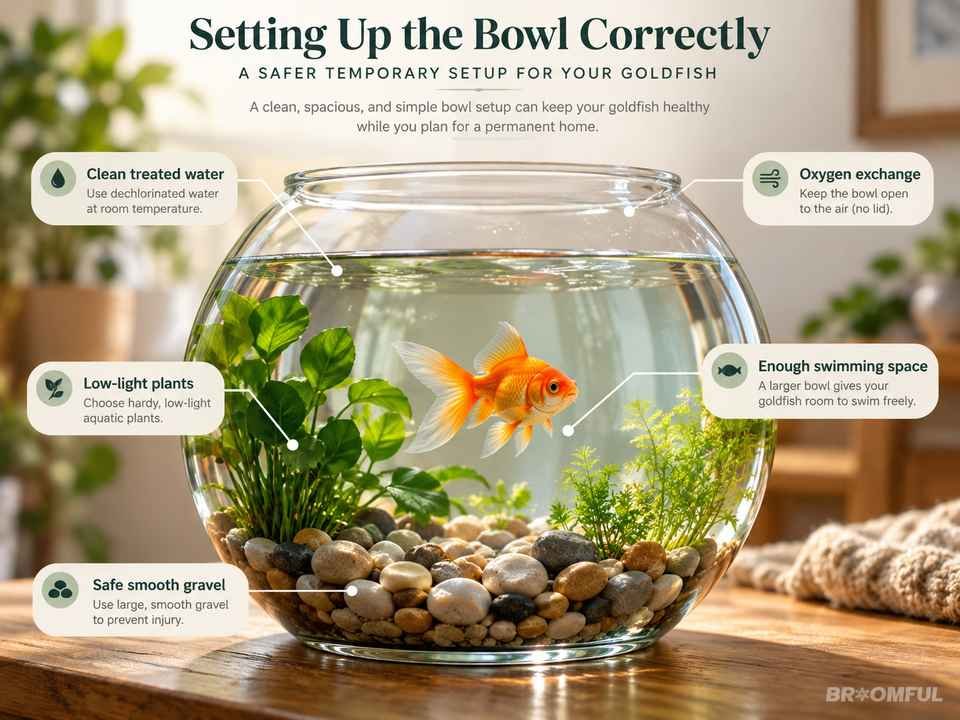
If you’re keeping a goldfish in a bowl right now, whether because you brought one home unexpectedly or because you’re waiting before moving it to a better setup, focus on reducing the risks as much as possible.
A bowl is difficult to maintain because waste builds up quickly in a small amount of water. The smaller the container, the less room there is for mistakes.
Choosing the Right Bowl Size
A larger container always gives a goldfish a better chance because more water helps slow down changes in water quality.
A minimum of 5 gallons (roughly 19 liters) is the smallest volume that provides some room for managing waste and maintaining stable conditions. The common 1–2 gallon “classic” fishbowls sold at fairs are not suitable for anything beyond a short temporary period.
These small bowls become unsafe quickly because ammonia levels can rise rapidly and the fish has almost no space to grow.
How to Take Care of a Goldfish in a Small Bowl
If a larger container is not available yet, careful daily maintenance becomes necessary:
- Change 50% of the water every single day
- Keep only one goldfish in the bowl
- Avoid overfeeding because leftover food quickly increases ammonia
- Add an air stone or small battery-powered air pump if possible
A small bowl requires more work than many people expect. The lack of filtration means the owner has to compensate through frequent cleaning and careful feeding.
Substrate, Plants, and Decor
A simple setup is easier to keep clean and reduces risks for the fish.
- Use large, smooth gravel that is too big for the goldfish to swallow
- Add one or two low-light live plants (like anacharis or hornwort); they can help absorb some waste
- Avoid sharp or rough decorations that may damage fins, especially on fancy varieties like fantails
Water Care: The #1 Survival Factor
Water quality is the biggest factor in keeping a goldfish healthy. Many fish do not die because of a lack of food or attention; they die because the water becomes unsafe.
A bowl can look clean while still containing harmful levels of ammonia and other waste chemicals.
Can You Use Tap Water for Goldfish? How to Treat It
“Can you use tap water for goldfish?” is one of the most common questions asked by new fish owners. And the answer is yes, tap water can be used, but it needs proper treatment first.
Most tap water contains chlorine or chloramine, and both can harm a goldfish’s gills.
How to treat tap water for goldfish:
- Add a water conditioner/dechlorinator according to the bottle’s instructions
- Allow the treated water to sit for a few minutes before adding it
- Match the replacement water temperature with the bowl water within a couple of degrees
Skipping conditioner is a common mistake. Untreated situations often result in chlorine exposure, which can cause stress signs such as gasping, clamped fins, or unusual inactivity.
The answer to how long a fish can live in tap water without treatment depends on the chlorine concentration, but the effects can become serious within hours.
The Nitrogen Cycle Made Simple
Fish waste breaks down through a natural process:
Fish waste → Ammonia → Nitrite → Nitrate
The bacteria responsible for this process are what make a cycled aquarium safer. Filters provide surfaces where these helpful bacteria can grow and handle waste more effectively.
A bowl usually does not have enough surface area to support strong bacterial colonies, which is why ammonia problems develop much faster.
How to Take Care of Goldfish Without Oxygen (Aeration Without a Pump)
Learning how to take care of goldfish without oxygen equipment means improving natural oxygen exchange in the bowl.
You can increase oxygen availability by:
- Keeping the water level slightly below the rim to increase surface movement
- Pouring a cup of water back into the bowl from a small height several times a day
- Keeping the bowl in a cooler room because warmer water contains less dissolved oxygen
- Avoiding overcrowding, which increases oxygen demand
A small battery-powered or USB air stone is a low-cost improvement that can make oxygen levels much more stable.
Water Change Schedule
| Setup | Recommended Water Change |
| Small bowl (under 5 gal), no filter | 30–50% every 1–2 days |
| Larger bowl (5+ gal), no filter | 25–30% every 2–3 days |
| Filtered tank, cycled | 10–20% weekly |
Feeding Your Goldfish Correctly
What Food Do Goldfish Eat?
What food do goldfish eat? Goldfish eat a balanced omnivorous diet rather than feeding only one type of food.
A suitable diet includes:
- High-quality goldfish flakes or pellets as a base
- Occasional blanched vegetables (peas with skins removed, zucchini, spinach)
- Rare treats like brine shrimp or bloodworms
Goldfish will often continue looking for food even after they have eaten enough, so portion control matters.
What Do Fantail Goldfish Eat vs. What Do Comet Goldfish Eat?
Both fantail and comet goldfish eat the same basic types of food, but their body shapes affect what works best.
What do fantail goldfish eat should usually include sinking pellets because their rounder bodies can make surface feeding more difficult and may increase the chance of swim bladder problems.
What do comet goldfish eat can include floating flakes because comets are more streamlined swimmers and are better suited to feeding near the surface.
Feeding Schedule and Portion Control
Feed only the amount your goldfish can finish in around two minutes, once or twice a day.
Extra food quickly becomes waste. In a bowl, there is no filter to catch leftover pieces, so uneaten food can cause ammonia levels to rise.
Common Feeding Mistakes
- Overfeeding because the fish always appears hungry
- Allowing leftover food to decay in the bowl
- Feeding only dry flakes without adding any vegetable variety
Temperature and Environment
Do Goldfish Need Heaters?
Generally, no. Goldfish are cold-water fish that are adapted to temperate climates, and most healthy goldfish can live comfortably at normal room temperature without extra heating.
Adding a heater unnecessarily can create problems because goldfish do not need tropical water conditions. Stable temperatures are usually more important than warmer temperatures.
How Cold Can Goldfish Tolerate? Can Goldfish Live in Cold Water?
How cold can goldfish tolerate is one reason they are considered hardy fish. Healthy adult goldfish can tolerate water temperatures down to around 50°F (10°C) for extended periods, and they can handle even colder conditions briefly.
This is why goldfish are commonly kept in outdoor ponds in many climates.
Goldfish can live in cold water. The bigger concern is often water that becomes too warm. Temperatures above roughly 75–78°F/24–26°C reduce available oxygen and increase a goldfish’s metabolism and waste production.
Lighting and Placement
Keep the bowl away from direct sunlight. Sunlight can encourage algae growth and cause sudden temperature changes throughout the day.
Choose a stable location away from windows, heating vents, and speakers. Vibrations and sudden changes in light can create unnecessary stress for goldfish.
Caring for a Goldfish From the Fair
The First 24 Hours After Bringing It Home
Learning how to take care of a goldfish from the fair begins as soon as the fish arrives home.
The first few hours are important because the fish is already experiencing stress from transport and a new environment.
- Don’t place the fish directly into the bowl. Float the sealed bag in the bowl for 15–20 minutes to help match temperatures.
- Slowly add small amounts of bowl water into the bag over another 15 minutes so the fish can adjust to the new water conditions.
- Use a net to move the fish into the bowl instead of pouring the fair water into the bowl, since that water may contain contaminants.
Upgrading From Bag or Bowl to a Proper Setup
Most fair goldfish are common or comet varieties, and they can grow quickly. They need much more room than the small containers they are usually given.
A proper setup of ideally 20+ gallons should be planned within the first few months. The fair bowl should be treated as temporary housing, not the fish’s permanent home.
Common Fair Goldfish Mistakes
- Assuming the small bowl it came in is suitable forever
- Skipping water conditioner because the fish is only “for a little while”
- Feeding too much during the first few days because of excitement
Goldfish Care for Kids
Simple Tasks Kids Can Handle
Goldfish care for kids works best when children have simple responsibilities they can manage safely.
Kids can help with:
- Feeding a pre-measured pinch of food once a day
- Checking whether the water looks clear or cloudy
- Reminding an adult when water needs to be changed
The goal is to help children learn responsibility while keeping the fish’s needs first.
Safety Tips When Kids Handle Fish
- Always supervise water changes because conditioners and buckets should not be handled without an adult.
- Teach children not to tap the glass or add extra food because the fish appears hungry.
- Wash hands before and after touching bowl water
When to Upgrade: Signs Your Goldfish Has Outgrown the Bowl
Behavioral Signs
Changes in swimming behavior can be early warning signs that something is wrong.
Gasping near the water surface, unusual tiredness, or irregular swimming may point to poor water quality or low oxygen levels. These problems are especially common in small, crowded bowls.
Water Quality Signs
The water itself can reveal when the bowl is struggling.
Cloudy water, unpleasant smells, or algae returning quickly after cleaning often indicate that waste is building up faster than the bowl can handle.
Moving to a Tank
The realistic long-term answer to can you keep a goldfish in a bowl and can you put goldfish in a bowl permanently is no.
A single common or comet goldfish needs at least 20 gallons, while fancy varieties such as fantails need at least 10–15 gallons. Both setups require a cycled filter.
Moving your fish into a proper tank is not a sign that the bowl failed. It is simply the next step for a fish that has the potential to live for two decades.
FAQ: Frequently Asked Questions
How long does a goldfish live in a bowl?
Typically just 1–5 years, which is much shorter than their 10–20+ year potential in a properly maintained filtered tank. The reduced lifespan is usually linked to ammonia buildup, limited oxygen, and restricted space.
Is it bad to put goldfish in a bowl?
As a permanent home, yes. Bowls do not provide enough filtration or space, which can significantly reduce a goldfish’s lifespan. As temporary housing for a day or two while preparing a better setup, a bowl can be acceptable with frequent water changes.
Can you use tap water for goldfish?
Yes, but only after treating it with a water conditioner that removes chlorine and chloramine. Untreated tap water can damage gills and cause stress within hours.
Do goldfish need heaters?
No. Goldfish are cold-water fish and usually do well at normal room temperatures. A heater is not normally needed unless the room regularly drops below the mid-50s°F.
What do goldfish eat?
Goldfish eat a combination of flakes or pellets, occasional blanched vegetables, and rare protein treats such as brine shrimp. Fantails generally do better with sinking pellets, while comets can handle floating flakes.
How cold can goldfish tolerate?
Goldfish can tolerate water temperatures down to around 50°F (10°C) for extended periods. The bigger concern is overly warm water because it reduces oxygen levels.
How do I take care of a goldfish without oxygen equipment?
Improve oxygen exchange by keeping the water below the rim and gently returning water into the bowl several times daily. A small battery-powered air stone can also provide an effective improvement.
When should I upgrade from a bowl to a tank?
As soon as possible, ideally within the first few weeks. Signs such as surface gasping, cloudy water, or unpleasant odors indicate that the bowl is no longer providing safe conditions.
Conclusion
A goldfish bowl is not automatically a death sentence, but it should be viewed as temporary housing. Keeping a goldfish healthy in a bowl requires careful attention to water quality, feeding, and oxygen levels every day.
Three takeaways to remember:
- Treat tap water with a conditioner before every water change — untreated water can quickly harm your fish.
- A bowl requires much more maintenance than a filtered tank. If daily care becomes difficult, upgrading is the practical next step.
- Goldfish can live 10–20+ years, so their living space should be planned around their potential lifespan rather than the small container they arrive in.
Start today by treating your water, creating a feeding routine, and planning for a proper filtered tank. Your goldfish’s decade-plus lifespan depends on the care decisions you make now.
