
Almost 65% of new fish keepers abandon their hobby within the first year, and the top reason for this is cloudy, algae-filled water. You’re not alone if you’ve ever looked into a cloudy tank and wondered what you did wrong, and the solution is not as difficult as you might think.
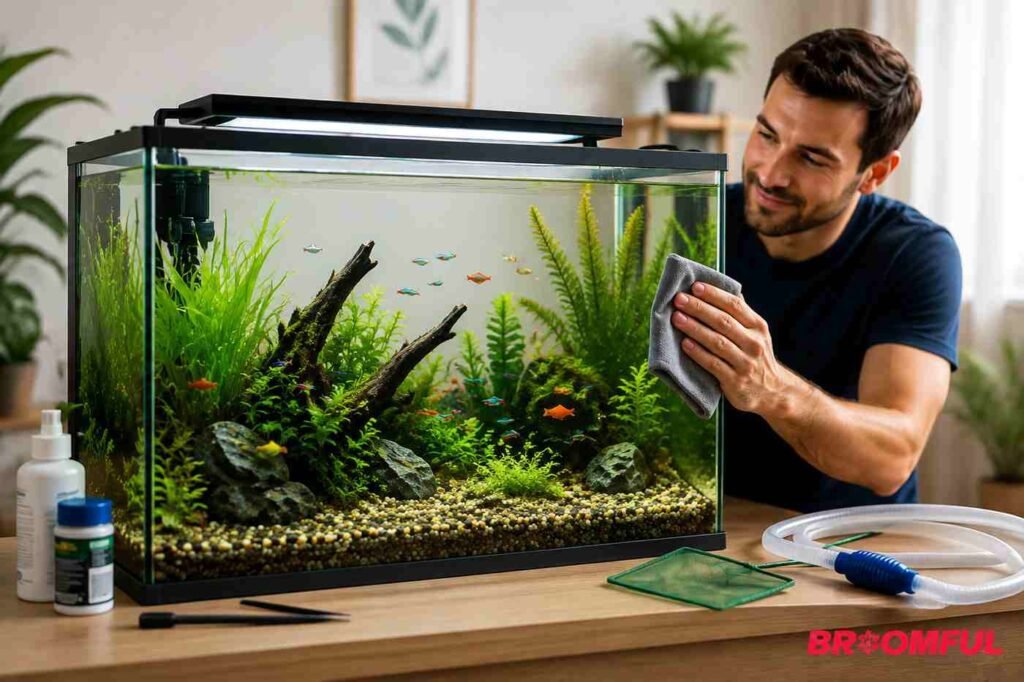
Learning how to keep an aquarium clean is not about cleaning it every day. It’s the development of a few simple, regular habits proper filtration, a logical water change schedule, and a gravel-cleaning program that all play their part, so your tank practically takes care of itself. Most hobbyists clean the wrong things too often (glass, decorations) and the right things not enough (substrate, filter media, water chemistry).
You’ll know how to maintain aquarium water using a DIY approach properly, how often to clean an aquarium with and without a filter, how to keep aquarium water clean for betta fish and other sensitive species, how to control algae growth in both freshwater and saltwater aquariums, and how to create a maintenance schedule that you can follow, whether you are keeping a 5-gallon nano tank, a 75-gallon community aquarium, or a turtle habitat.
Why Aquarium Water Gets Dirty in the First Place
But before you can determine the best way to keep aquarium water clean, it is important to know what dirty water is on a chemical level because scrubbing the glass won’t help.
The Nitrogen Cycle Is the Real Culprit
All aquariums have a biological process called the nitrogen cycle. Fish waste, uneaten food, and decomposing plant material decompose to ammonia, which is then converted to nitrite and then to nitrate by beneficial bacteria. Ammonia and nitrite are harmful at low levels; nitrate is relatively harmless but accumulates and promotes algal growth. Test strips are more important than checking a tank that “appears” clean, because it can have dangerously high ammonia levels.
Bioload vs. Tank Capacity
Bioload is the combined amount of waste produced by your fish, plants, and feeding practices. One of the most common mistakes is to stock by the outdated “one inch of fish per gallon” rule; this does not take into account the body mass, waste production, and behavior of the species, and a single goldfish can out-pollute ten neon tetras. Overstocking is the single fastest way to overwhelm your filtration and force more frequent cleanings.
Organic Buildup: The Silent Water-Clouder
Dissolved organic compounds (DOCs), which are residues of food, fish slime coat, and decaying leaves, do not always produce noticeable cloudiness at once. Instead, they grow as a film on gravel, decor, and glass, and slowly feed on the bacteria and algae until a sudden bloom occurs. This is why cleaning aquarium stones and vacuuming the substrate is equally important as cleaning the glass.
Water Hardness, pH, and Why They Matter for Clarity
Two aquaria having the same setup and filter may have entirely different appearances given different water chemistries. Hard water (high in dissolved calcium and magnesium) can cause cloudy white mineral deposits and limescale on glass and equipment and can cause pH drops in very soft water that can stress fish and slow down the bacteria that break down the waste. In areas with mineral-rich tap water, testing general hardness (GH) and carbonate hardness (KH) along with pH will provide a more comprehensive profile than ammonia and nitrite testing alone. A KH less than 4 dGH will make a tank susceptible to a rapid drop or rise in pH, a frequent and often overlooked reason for stressed fish in a “clean-looking” tank.
Cycling a New Tank: The Foundation of Long-Term Cleanliness
All long-term cleaning plans require the bacterial colonies to convert ammonia to nitrite to nitrate to be fully cycled and stable. The No. 1 cause of new tanks requiring constant aggressive cleaning in the first month is the lack of a nitrogen cycle. In a fishless cycle, ammonia, nitrite, and nitrate should be tested every 2-3 days, and the cycle is complete in 4-6 weeks when ammonia is detected, but no nitrite or nitrate is found. That is why so many fishkeepers who are just starting link the first month of keeping fish with constant water quality issues, which they think are directly related to their cleaning skills.
How Often Should You Clean a Fish Tank?
It’s one of the most-asked questions in the hobby, and the straight answer is: It depends on your setup, but there are numbers to look at that are pretty solid.
General Cleaning Frequency by Tank Type
| Tank Type | Partial Water Change | Glass Cleaning | Filter Media Rinse | Full Gravel Vacuum |
| Small tank (under 10 gal) | Weekly, 20–30% | Weekly | Every 2–4 weeks | Every 1–2 weeks |
| Medium freshwater (10–40 gal) | Every 1–2 weeks, 15–25% | Every 1–2 weeks | Every 4 weeks | Every 2–4 weeks |
| Large freshwater (40+ gal) | Every 2 weeks, 10–20% | Every 2 weeks | Every 4–6 weeks | Monthly |
| Heavily planted tank | Every 1–2 weeks, 20% | As needed | Every 6–8 weeks | Rarely (roots hold substrate) |
| Saltwater/reef | Weekly, 10% | 2–3x weekly (algae) | Every 4 weeks | Rarely, spot-clean only |
| Turtle tank | 2–3x weekly, 25–50% | Weekly | Every 2 weeks | Weekly |
How Often to Clean a Fish Tank With a Filter
A tank that has been cycled properly, is appropriately stocked, and has a good filter should require a 25% water change every 1-2 weeks, not a full teardown. The filter processes the biological load, and it is your responsibility to eliminate nitrates and debris that the filter cannot process. Rinsing the filter media too frequently (more than once a month) will actually slow you down because you will destroy the beneficial bacteria colony that lives in the filter media (sponge or cartridge).
Signs You Need to Clean Sooner Than Scheduled
- Cloudy or tinted water that doesn’t clear after a regular change of water
- If ammonia or nitrite is above 0 ppm on a liquid test kit.
- A strong odor when you lift the lid (healthy tanks smell faintly earthy, not foul)
- Fish climbing on the surface or fish that are unusually lethargic.
- Biofilm (not the same as beneficial bacterial bloom) that can be seen on the water surface.
Overcleaning: The Opposite Problem
Over-cleaning the tank (completely changing the water, scrubbing all decorations, and rinsing all filter media in tap water weekly) removes the beneficial bacteria you need and can cause a small spike in ammonia levels (called “old tank syndrome rebound”). Consistency beats intensity.
Step-by-Step: How to Clean a Fish Tank the Right Way
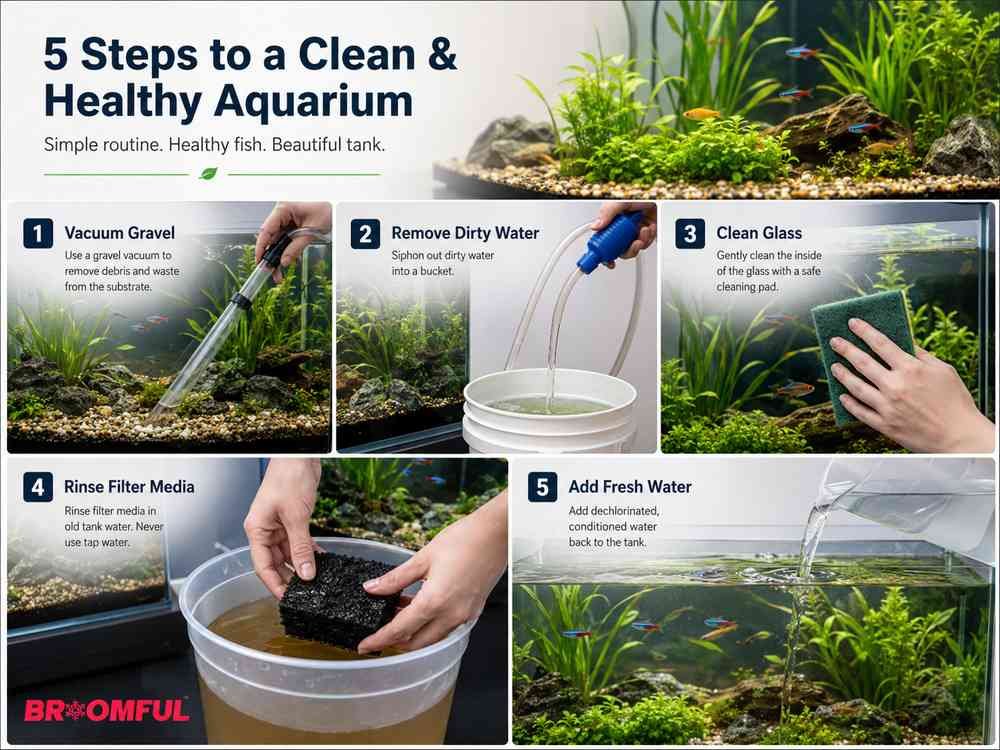
If you’re asking yourself how to clean a dirty fish tank that’s been neglected or how to clean a small aquarium weekly, the following sequence is for almost all freshwater aquariums.
Step 1: Gather Your Tools and Unplug Electronics
Never do a water change while the heater is plugged in a heater in the air while plugged in can crack from thermal shock. A gravel vacuum/siphon, a bucket that will only be used for the aquarium (not for soap), an algae scraper/pad, and a water conditioner that will neutralize chlorine and chloramine.
Step 2: Vacuum the Substrate First
Use the gravel vacuum and work in sections, pushing the gravel a few inches into the gravel, letting the vacuum suck the debris up, and letting the gravel settle back down. Whether you want to clean tank gravel or clean rocks for an aquarium, this is the one thing that is the solution to them — you don’t lift and scrub rocks one by one; you vacuum around them while they are in place.
Step 3: Clean the Glass Inside and Out
Use a special algae pad or magnetic cleaner for the inside of the tank and a vinegar-water solution for the outside for hard water spots to clean aquarium glass. Avoid circular strokes, as these will miss patches, and scrape in overlapping vertical strokes.
Step 4: Perform the Water Change
Remove 10-25% of the water (see above table), but never from the top; always from the bottom, dirtiest part of the water near the substrate. Fill with the dechlorinated water at a temperature as close as possible to the water in the tank a temperature difference of more than 2-3°F may stress fish.
Step 5: Rinse Filter Media in Tank Water Only
This is where most guides go wrong: they rinse sponges and cartridges under the tap, not in the bucket of water that they just siphoned out. The chlorine in the tap water kills the beneficial bacteria that colonize the media, which is not desired.
Step 6: Wipe Down the Hood, Lid, and Exterior
If left untreated, salt creep on salt water tank lids and mineral film on fresh water hoods will block the light and air circulation. Buildup that occurs once a week from a quick wipe with a damp microfiber cloth is much easier to remove than any that has accumulated over time.
How to Wash Aquarium Decorations and Hardscape
Remove decorations only from time to time (not during every cleaning) and rinse them in old tank water or a very weak (1:10) bleach solution followed by a long soaking in an extended dechlorinator and air dry — never in dish water, as this leaves a residue that is poisonous to fish.
Deep Cleaning: How to Clean a Dirty Fish Tank After Neglect
Don’t rush to fix everything if the tank has been neglected for weeks or months. A full reset (most of the water is drained, all surfaces are scrubbed, and all the filter media is replaced at once) eliminates the beneficial bacteria colony and can cause a toxic ammonia rise that is even more severe than the original neglect. Rather, make the recovery over 7-10 days: 25-30% water changes and light gravel vacuum on day 1, test parameters, wait 2-3 days, then repeat. This is a “rescue cycle” (also known as a staged approach), which allows bacteria to recover between treatments rather than dying out completely, and is the preferred technique of the most veteran hobbyists over one dramatic overhaul.
How to Keep Aquarium Water Clean Naturally
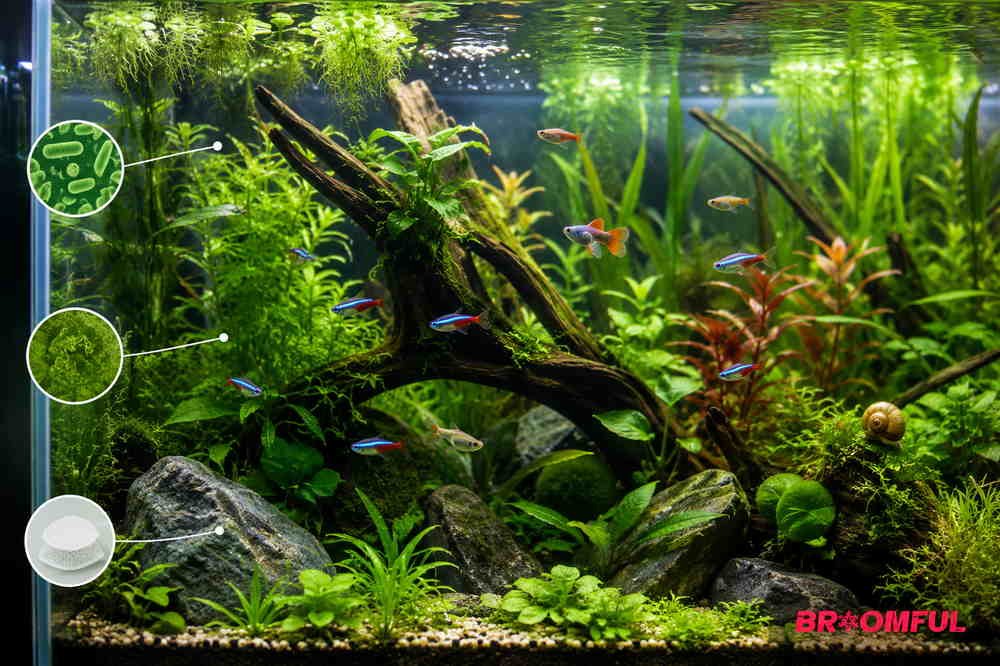
There are chemical clarifiers, but most experienced hobbyists prefer to use natural means of keeping aquarium water clean because they tackle the biological problem at its core rather than just the symptoms.
Live Plants as Natural Filtration
Fast-growing stem plants (hornwort, water wisteria, pothos with roots in the water) take up nitrates and ammonia directly, compete with algae for nutrients, and kill algae blooms. A moderately planted tank can decrease nitrate levels in a significant way when compared to a bare tank stocked and fed with the same fish.
Beneficial Bacteria and Biological Balance
A well-cycled filter is a natural cleaning system the bacteria that have grown on the filter media and substrate will neutralize toxins more quickly than any filter additive will. When starting a new tank, a scoop of substrate from a mature tank or a piece of the media from a mature tank is used to speed up this process rather than starting from scratch.
Natural Algae Grazers
Nerite snails, amano shrimp, and otocinclus catfish will eat the algae film off the glass and hardscape as part of their normal diet, serving as a living maintenance crew. They are not a substitute for water changes, but they are a useful way to prolong the time between water changes.
Feeding Discipline
Overfeeding is perhaps the biggest natural-cleanliness lever that most people neglect. Only feed the fish what they will eat within 2 minutes, once or twice a day (unconsumed food is the number one cause of ammonia and the quickest way to negate all other efforts on this list).
Natural Water Clarifiers: Driftwood, Peat, and Tannins
The tannins produced by botanicals, such as driftwood, catappa (Indian almond) leaves, and peat moss, are responsible for the tea-tinted appearance of the water and slightly lower pH that many hobbyists recognize as the hallmarks of “blackwater” biotopes, and they also possess mild antibacterial and antifungal properties which help keep fish healthy, especially those from tannin-rich environments like bettas and wild-caught tetras. It is not the same as the clarity of a sparkling glass, but it is a very natural method of maintaining water quality without the use of synthetic products, and many keepers notice a marked improvement in the color and activity of their fish after adding tannins.
Chemical Filtration as a Supplement, Not a Replacement
Activated carbon and specialty resins (ammonia-removing zeolite, phosphate-binding media) polish water at the molecular level that mechanical filtration cannot reach, removing dissolved organics, discoloration, and odor. While these media are effective as a short-term treatment, such as when a tank is first medicated and the medication is not removed by water changes, they cannot replace water changes, as they do not remove the underlying nitrate and mineral buildup causing long-term water quality issues.
How to Keep Aquarium Water Clean Without a Filter
Some minimalist aquarium setups, small shrimp bowls, and betta cups do not use a filter system, and the majority of the water cleaning work is performed by hand.
Why Filterless Tanks Need More Frequent Changes
If you are not continuously working with mechanical and/or biological filters, waste and toxins will build up between your interventions. A filterless system would typically require 50% water changes every 2-3 days, whereas a 5 gal filtered system would require 50% water changes weekly.
DIY Cleaning Approaches for Filterless Setups
- Sponge or air-stone mini-filter: inexpensive, low-flow, air-driven sponge filter provides biological filtration without disturbing bettas or shrimp; many “unfiltered” tanks can benefit from adding one of these.
- Live plants working double duty: floating plants such as duckweed or frogbit in a filterless bowl will absorb ammonia directly from the water column, which acts as an indirect filter.
- Manual siphoning: a mini siphon, similar to a turkey baster, is used to remove waste from the bottom of small bowls without changing the water.
- Activated carbon sachets: These are dropped into the water and polish the water between changes to remove discoloration and odours but do not remove biological toxins.
When a Filter Becomes Necessary
For any tank larger than 5 gallons or any tank that has more than one or two small fish, the manual-only method is a burden to the extent that the tank benefits from filtration. When more than three partial changes are made per week, it is typically more cost-effective in terms of time to install a small filter rather than to maintain water manually.
Algae Control: Freshwater, Saltwater, and Marine Tanks
The most common complaint among hobbyists is algae, and algae control in a saltwater tank and marine setups is different than in a freshwater aquarium.
Understanding Algae Triggers
Algae requires 3 elements to bloom: light, nutrients (nitrate/phosphate), and time. Any one of the three – shorter photoperiod, less nutrients in the water, or more often changing the water and removing the nutrients – is enough to break the cycle. The majority of algae problems are due to too much light (more than 8-10 hours) and too much phosphate, which is the result of overfeeding or the use of tap water.
How to Get Rid of Algae in a Saltwater Tank
In saltwater tank systems, the most common culprit is typically phosphate and/or nitrate, which can be added to the system via reef-safe products, fish food, or tap water. This is dealt with at source by a phosphate reactor or granular ferric oxide (GFO) media, and the surface film is cleaned by a cleanup crew of turbo snails and hermit crabs.
Algae Control in Marine Tanks vs. Freshwater Tanks
| Factor | Freshwater Tank | Marine/Saltwater Tank |
| Primary trigger | Excess light + nitrate | Excess light + phosphate/nitrate |
| Common algae types | Green spot, brown diatoms, hair algae | Red slime (cyanobacteria), bubble algae, hair algae |
| Manual removal tool | Algae pad, magnetic scraper | Algae blade, turkey baster for detritus |
| Biological control | Nerite snails, amano shrimp, otocinclus | Turbo snails, hermit crabs, sea hares |
| Chemical/media control | Rarely needed if nutrients managed | GFO/phosphate reactor, carbon dosing |
| Water change impact | High — dilutes nitrate directly | Very high — also stabilizes salinity/alkalinity |
How to Wash Aquarium Filters and Media Without Losing Your Cycle
In addition to the rinse-in-tank-water rule, if you have a multi-stage filter, staggering the cleaning of the different pieces of the filter media is helpful. Only change the mechanical sponge every week, and do not touch the biological media (ceramic rings, bio-balls) at any time, including regular maintenance this way you won’t be disrupting the entire bacteria colony at once. Change mechanical filter floss/pads as they become worn, but biological media as semi-permanent; change when it breaks down, not on a fixed schedule.
Diatoms in New Tanks Are Normal
The first 4-6 weeks of a new freshwater or marine tank will often be covered with a brown dusty film from a diatom bloom, which is likely to be caused by silicates being released during the tank cycling process and will typically clear up on its own after the nutrients have been stabilised. At this point, panicking and introducing chemical treatments are likely to cause more problems than they solve, so it’s best to wait it out with normal maintenance.
UV Sterilizers for Persistent Algae and Green Water
An inline UV sterilizer will irradiate free-floating algae cells as the water flows through, which causes the algae to clump and be mechanically filtered; this is one of the few true non-chemical solutions for removing algae (as opposed to surface algae).
Special Cases: Betta Fish, Turtles, Nano Tanks, and Large Tanks
Not all tanks have the same rules. Here’s how to keep aquarium water clean for betta fish, turtles, and tanks at both ends of the size spectrum.
How to Keep Aquarium Water Clean for Betta Fish
Bettas are sensitive to strong currents and rapid fluctuations in water quality, so it is best to use a gentle filtration system (sponge filter with variable flow options) and smaller, more frequent water changes (20% every week, not 40% every two weeks). Live plants like anubias are good for betta tanks, particularly those under 5 gallons, as they will help to buffer ammonia between water changes and that they can take low light.
How to Keep Turtle Aquarium Water Clean
Fish are much cleaner than turtles are, as they eat and poop in the same water, and they also tend to break down food into particles which cloud the tank almost instantly. To keep turtle aquarium water clean effectively, you need to have oversized filtration, which is at least 3-4 times the volume of the tank, and a separate feeding container outside the main aquarium so that food debris will never get into the main water at all. This one habit change will decrease the frequency of cleaning turtles in the tank more than any filter upgrade.
How to Clean a Small Aquarium (Under 10 Gallons)
The smaller the water volume, the more quickly the water chemistry changes due to the amount of water to be diluted. For tanks less than 10 gallons, weekly changes of 20-30%, twice weekly glass wipes, and a nano-sized gravel vacuum for tight spaces are essential.
How to Clean a Large Aquarium (40+ Gallons)
Interestingly, cleaning a large aquarium can be less regular but more intensive, because the larger the water volume, the more toxins will be diluted, and pH changes will be naturally buffered. Once beyond the 40-gallon mark, the graveless vacuum system is much faster than a bucket system, and is also available in a style that connects directly to a faucet.
Shrimp Tanks: A Special Case for Sensitive Invertebrates
Shrimp (particularly cherry, amano and crystal red) are more sensitive to copper, ammonia spikes and sudden changes in parameters than most fish because they do not have the protection of the fish’s mucous layer. A single shrimp colony can be destroyed by any cleaning product, medicine, or even tap water that has been treated upstream with a copper-based algaecide, while the fish may not show any symptoms at all. Shrimp tanks should have smaller and slower water changes than fish tanks: 10-15% at a time, drip acclimated if parameters are very different, and never use fertilizers or medications that contain copper in any shrimp tank.
Common Mistakes That Undo Your Cleaning Work
Understanding how to maintain aquarium water clean long-term means avoiding these frequent, avoidable errors.
Mistake 1: Rinsing Filter Media Under Tap Water
This one habit is covered above and repeated here: It is the most frequent cause of “mysterious ammonia spikes” immediately after a “thorough cleaning” and resets your biological filtration.
Mistake 2: Cleaning Too Much at Once
In one session, it is not recommended to do a full gravel vacuum, decoration scrub, and filter rinse, as this will remove too much good bacteria at once and will upset the tank. Spread these activities out over the weeks.
Mistake 3: Using Household Cleaning Products Nearby
Even a residue of aerosol cleaners, air fresheners, and even hand soap in the water around an open tank can be enough to kill fish at concentrations undetectable by humans.
Mistake 4: Not Testing Water Chemistry
Clear water does not mean safe water water that’s crystal clear can be toxic from ammonia or nitrite. A liquid test kit is more accurate than strips and should be used weekly in new tanks and monthly in established tanks.
Mistake 5: Ignoring How to Keep Aquarium Water Clean After Cleaning
The question of how to keep aquarium water clean after cleaning is an unexpectedly popular one, and it indicates that there is a problem within a day or two of a change, aquarium water often becomes cloudy once more because the disturbed substrate bacteria have not re-established themselves, or because too much water was changed too quickly, disrupting the biological balance. The solution is to make small changes instead of big ones, and to allow new water to stand for a short period of time before introducing fish into the system if using a separate water source to top off.
Tools, Products, and a Printable Maintenance Schedule
Organised by task, here’s how to keep your aquarium water clean with the right tools.
Essential Toolkit
- Gravel vacuum/siphon (manual or python style for larger tanks)
- Algae scraper or magnetic glass cleaner.
- Aquarium bucket (must be used only for the aquarium)
- Liquid Water Test Kit (Ammonia, Nitrite, Nitrate, pH)
- Water conditioner/dechlorinator
- Aquarium-safe scrub pad for decorations
Weekly, Biweekly, and Monthly Task Breakdown
| Frequency | Tasks |
| Weekly | Glass wipe, top off evaporated water, visual health check on fish |
| Every 1–2 weeks | 15–25% water change, gravel vacuum, test water parameters |
| Monthly | Rinse filter media in tank water, wipe hood/lid, check heater and filter function |
| Every 3–6 months | Trim/thin live plants, inspect tubing for clogs, deep-check equipment seals |
Building a Schedule You’ll Actually Keep
The long-term successful hobbyists are those who clean the most, but not the most often. The friction of having to remember to do maintenance on the tank when it looks bad is eliminated by setting a calendar reminder for maintenance on the same day of the week, and keeping the toolkit handy.
Seasonal Adjustments Worth Planning For
In summer, water loss increases, the concentration of dissolved minerals increases, and hardness and pH can slowly creep outside a comfortable range without the addition of any waste buildup, so top off with plain dechlorinated water (not a complete change) to solve this problem without over-diluting any nutrients the plants may require. Since fish metabolic rates are slower in colder water, it’s natural to reduce feeding during the winter months, which decreases bioload, and in many cases, the water change schedule is extended a bit longer in winter. When you synchronize your maintenance cycles with these seasonal changes, instead of doing the same maintenance every month, you’re not wasting effort on what you don’t need.
When to Call In Professional Testing
If the ammonia, nitrite, or nitrate levels remain high and are not getting lower with a regular cleaning schedule, it may be a good idea to test the tap water, as some municipal water supplies have naturally high levels of phosphate or nitrate that can not be completely counteracted by regular tank-side cleaning. Normally, serious reef keepers and planted freshwater systems under careful maintenance use a reverse osmosis (RO) unit or RO/deionization (RO/DI) system to remove these source contaminants prior to them entering the tank.
FAQ:
How often should you clean a fish tank?
Most tanks should have 10- 25% of the water changed once a week or every 1-2 weeks, and should also be cleaned with a glass once a week. Frequency will vary according to tank size, stocking density, and filtration; the smaller and more densely stocked the tank, the more frequently the tank needs to be attended; the larger and less densely stocked the tank, the less frequently the tank needs to be attended.
How often to clean a fish tank with a filter?
For a filtered tank, a partial water change is recommended every 1-2 weeks instead of a full water change. The filter is constantly removing biological waste, and your task is primarily to remove accumulated nitrate and debris, not to reset the whole system.
What is the best way to keep aquarium water clean?
The most effective combination of factors is proper stocking, disciplined feeding, filter cycling, and small, frequent water changes (10-25% weekly or biweekly), not large, infrequent filter changes. Intensity is not as important as consistency.
How do you clean aquarium glass without scratching it?
Scrape with a soft algae pad or magnetic cleaner (use a softer pad for acrylic tanks than for glass tanks), overlapping in vertical lines. Do not use anything sharp or that has previously been used with household chemicals.
Why does my aquarium water turn cloudy again after cleaning?
This typically refers to changing too much of the water at once, thereby stirring up settled bacteria or a bacterial bloom reacting to an excess of nutrients. It usually clears up within a few days with smaller, more frequent changes and testing ammonia/nitrite levels.
How do I control algae in a saltwater tank without chemicals?
Keep the photoperiod below 8 hours, regularly change water to control the levels of phosphate and nitrate, and introduce snails, hermit crabs, and sea hares, which will naturally eat the algae. Chemical treatments are a last-resort treatment after nutrient control has failed.
Can I keep an aquarium clean without a filter?
Yes, if you’re looking at small aquarium setups, such as betta bowls, which are under 5 gallons, but you will need to change the water every 2-3 days, plus live plants or manual siphoning to manage waste that a filter would otherwise handle continuously.
How do I clean aquarium gravel without removing the fish?
A gravel vacuum siphon is designed to remove debris from the substrate without disturbing fish or removing gravel from the tank by inserting a few inches into the gravel, allowing the siphon to pull debris out while the gravel is settling.
Conclusion
Cleaning an aquarium is not just one big clean; it’s a series of small, regular steps that are done in harmony with the biology of the aquarium rather than against it. The three most important habits: Do not overhaul the filter too frequently; just change the water regularly; never wash or rinse filter media with tap water, as that will kill the beneficial bacteria that you need; and control light and feeding so that algae does not have a chance to take hold, but is starved out instead.
Whether you’re maintaining a betta bowl, a heavily planted freshwater tank, or a saltwater reef, the underlying principle is identical support the nitrogen cycle, don’t disrupt it. Start by setting a recurring weekly reminder for a 15–20% water change and a quick glass wipe, then build outward from there.
Ready to put this into practice? Grab a gravel vacuum and a liquid test kit today, run your first proper water change this week, and watch how much clearer (and calmer) your tank becomes within just a few days.
